
Project Overview
This scenario mirrors a GPU / SoC-style program in an AMD / NVIDIA / Intel environment. The focus is on keeping architecture intent, IP integration, and verification aligned so G3 readiness is predictable rather than reactive. The diagram below shows the end-to-end architecture workflow you would inherit as a silicon TPM.
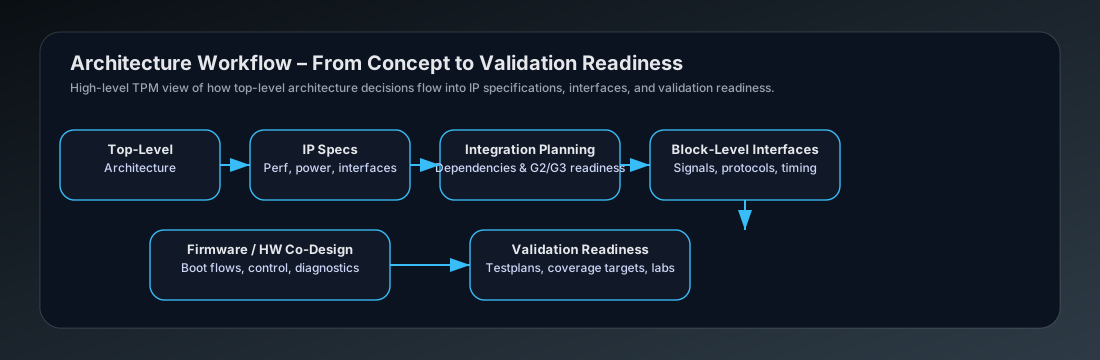
1. Top-Level Architecture & IP Spec Alignment
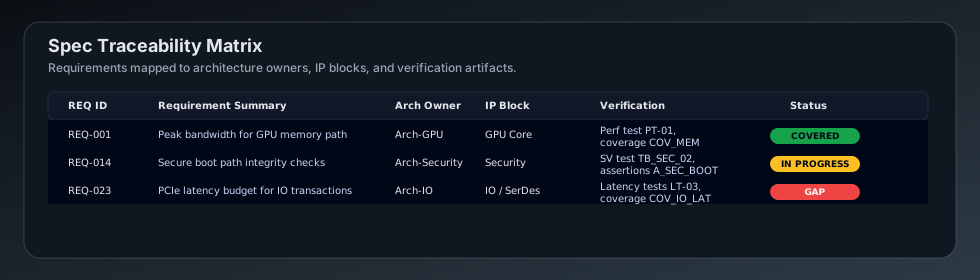
Early in the program, architecture and requirements change quickly. As TPM, I put structure around the churn: we lock an architecture review cadence, track decision history, and maintain a living spec traceability view.
- Biweekly architecture governance review with clear owners and decision logs.
- Traceability between performance requirements, IP ownership, and verification targets.
- Visibility for leadership into which requirements are covered vs. still at risk.
2. IP Integration Planning & Dependency Management
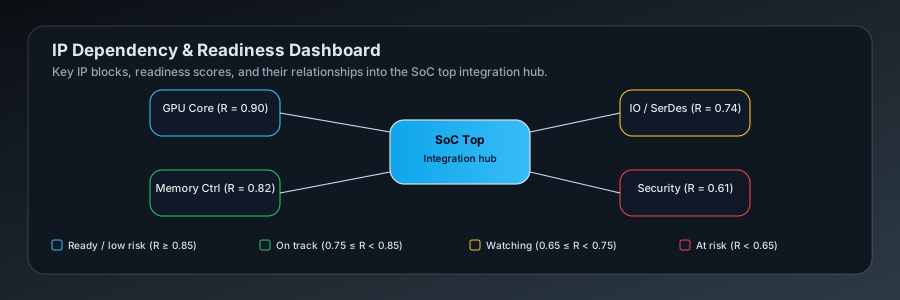
The biggest failure mode in silicon programs is unmanaged dependencies. Here, I use a dependency dashboard to track readiness scores for key IPs — GPU, Memory, IO, Security — and visualize how they converge into SoC top.
- Readiness scoring for each IP (R-score) feeding into G2/G3 gate prep.
- Clear upstream / downstream relationships into the SoC top integration hub.
- Early visibility of which IPs are gating system-level validation.
3. Verification Readiness & G3 Gate Preparation
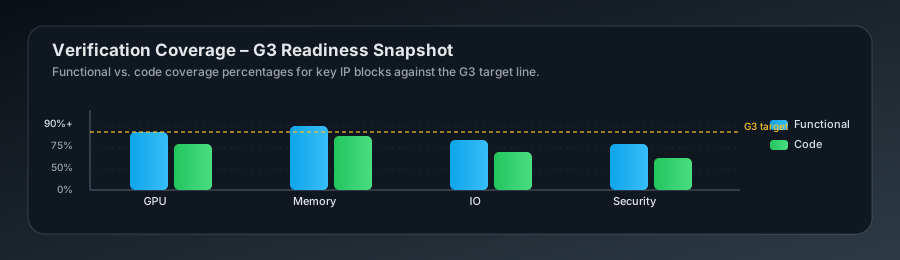
Verification is the highest schedule and quality risk. I treat the verification dashboard as a program heartbeat: it aggregates functional and code coverage, ties them to IPs, and compares them to the G3 target line.
- Functional + code coverage by IP, with a clear G3 threshold line.
- Used weekly to drive triage and focus on coverage gaps before gate review.
- Feeds directly into risk register entries for late coverage or missing tests.
4. Risk Register & Mitigation Strategy
All of the dashboards above roll into a structured risk register focused on architectural churn, late IP delivery, verification gaps, and timing closure issues. This register is what leadership actually consumes week to week.
- Risks tagged by owner, impact, likelihood, and affected G-milestones.
- Direct trace from risk entries to coverage, IP readiness, or spec gaps.
- Mitigation plans with dates that can be tracked like any other deliverable.
5. Final Outcomes & Case Study PDF
In this simulated program, applying this TPM approach to architecture, integration, and verification produced three main outcomes:
- Predictable G3 gate with clear evidence and fewer last-minute “heroics”.
- Reduced late-stage blockers through governance around architecture changes and IP readiness.
- Reusable dashboards and templates that can be pulled into future silicon programs or reused across lines of business.